Skip to content
Staying with a Nomadic Family: What to Expect
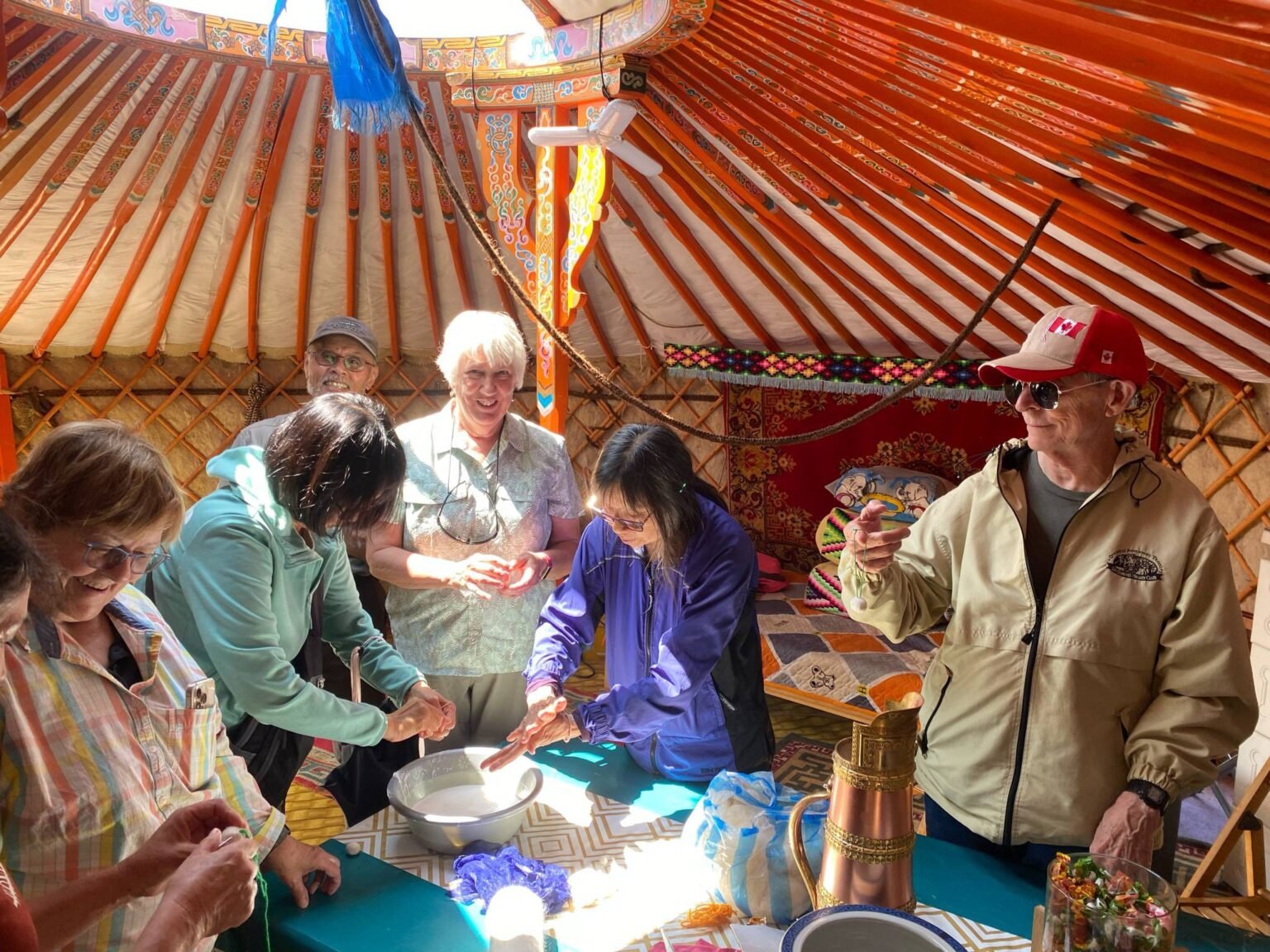
A ger camp homestay is the heart of most Mongolia itineraries. Here is how to be a respectful guest, what meals look like, and why it is worth the detour.
For many travelers, an afternoon or overnight spent with a nomadic herding family is the single most memorable part of a Mongolia trip — more so than any monument or landscape. Roughly a quarter of Mongolians still live this way, moving their gers (felt-covered round tents, often called yurts) between seasonal pastures with their herds of sheep, goats, cattle, camels and horses. A homestay is simple by design, but it rewards travelers who arrive with the right expectations and a bit of cultural awareness.
Facilities are basic, and that's the point
Expect a sleeping mat or simple cot inside the family’s ger or a nearby guest ger, an outdoor pit-latrine toilet, and washing done with a kettle or basin of heated water rather than a shower. Most nomadic families do not have 24-hour electricity, though solar panels and battery lighting are increasingly common in the evening. If a hot shower matters to you, ask your guide about arranging a stop at a nearby tourist ger camp partway through the trip.
Bring a headlamp and wet wipes
Facilities are minimal after dark, and a headlamp plus a pack of wet wipes will make evenings and mornings noticeably more comfortable.
Greeting etiquette matters
When entering a ger, greet everyone individually, walk clockwise around the interior, and avoid stepping on or leaning against the threshold, which is considered sacred. Food and drink should be accepted with your right hand or both hands together, and if you’re offered milk tea, dried curd, or airag (fermented mare’s milk), it’s polite to accept and take at least a small taste, even if it isn’t to your palate.
Meals are simple and centered on meat and dairy
Mongolian nomadic households don’t typically serve several dishes at once — expect one dish at a time, most often a hearty soup or a mutton, beef or goat-based main course, alongside homemade bread or fried dough. Dairy is central to daily life: milk, yogurt, butter, and dried curds (aaruul) are all offered generously, along with salty milk tea, which is the default hot drink throughout the day.
Join in, if you're invited
Many hosts welcome guests who want to help with daily chores — milking animals, herding livestock, or preparing food. Taking part, when invited, is generally seen as a sign of respect and genuine interest rather than an imposition, and it’s often the source of the most memorable moments of a stay.
A small gift goes a long way
It is thoughtful, though not obligatory, to bring a small gift for your host family — sweets, tea, or a small toy for children are all well received. Because your visit may be arranged through a local guide or tour operator, a portion of what you pay for the experience typically goes directly to the host family, making a respectful, appreciative visit a meaningful source of income as well as a cultural exchange.
A night or two with a nomadic family is not a polished hotel experience, and it isn’t meant to be. What it offers instead is a direct, unscripted look at a way of life that has remained largely unchanged for centuries — and for most travelers, that trade is well worth making.
Plan Your Gobi Adventure
Let our team build a custom Mongolia itinerary around the places in this article.
Inquire Now