Skip to content
Lake Khuvsgul: The Blue Pearl of Mongolia

One of the world’s clearest freshwater lakes sits in Mongolia’s far north. We cover the best months to visit, getting there, and where to stay nearby.
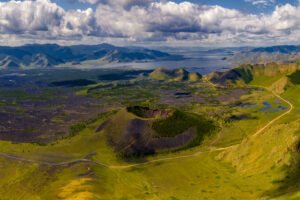
Tucked into the forested mountains near the Russian border, Lake Khuvsgul is Mongolia’s largest freshwater lake by volume and one of its most strikingly beautiful destinations — a sharp contrast to the arid steppe and desert most visitors associate with the country. Locals call it Mongolia’s “Blue Pearl,” and its clarity, scale and sheer remoteness make it feel like a different country entirely from the Gobi in the south.
A deep, ancient lake related to Baikal
Khuvsgul stretches 136 kilometres long and up to 262 metres deep, making it one of the deepest lakes in Asia. Like its far larger neighbour, Russia’s Lake Baikal, Khuvsgul was formed within the same tectonic rift system, and the two are connected via the Eg and Selenge rivers — earning Khuvsgul the nickname “the younger sister of Baikal.” Together, the two lakes hold roughly a fifth of the world’s unfrozen freshwater reserves.
Water clean enough to drink
Khuvsgul holds an estimated 70 percent of Mongolia’s fresh water reserves, and its water is famously clean — clear enough in places to drink directly, without treatment. The lake sits at 1,645 metres above sea level, surrounded by the taiga forests and peaks of the Sayan mountain range, which shelter a rich mix of wildlife including elk, brown bear, wolf, and the Siberian musk deer.
Home to the Tsaatan reindeer herders
The mountains north of the lake are home to the Tsaatan, one of the last reindeer-herding communities on Earth, numbering only a few hundred people. Reaching a Tsaatan community typically requires an additional multi-day horseback or trekking journey beyond the lake itself, but for travelers with the time, it offers a rare glimpse into a way of life found in very few other places.
Getting there and getting around
The most practical route is a roughly 90-minute domestic flight from Ulaanbaatar to Mörön, followed by a scenic two-hour drive to the lakeshore. The overland alternative — a 700-kilometre road trip — is a genuine adventure in its own right, taking 15 to 18 hours depending on road conditions, and is usually broken up over several days as part of a wider central Mongolia itinerary.
Summer is the easiest season to visit
June through August offers the warmest weather and the most reliable road conditions; the lake freezes solid from roughly January through May, drawing a smaller crowd of visitors for ice festivals and winter photography.
Whether you’re drawn by the boating, fishing, and horseback riding around its shores or simply the chance to see one of the clearest lakes on the planet, Khuvsgul rewards travelers willing to make the trip north. Pack warm layers regardless of season — even summer nights at this elevation can turn sharply cold.
Plan Your Gobi Adventure
Let our team build a custom Mongolia itinerary around the places in this article.
Inquire Now