Gandan Monastery
The Spiritual Heart of Mongolia
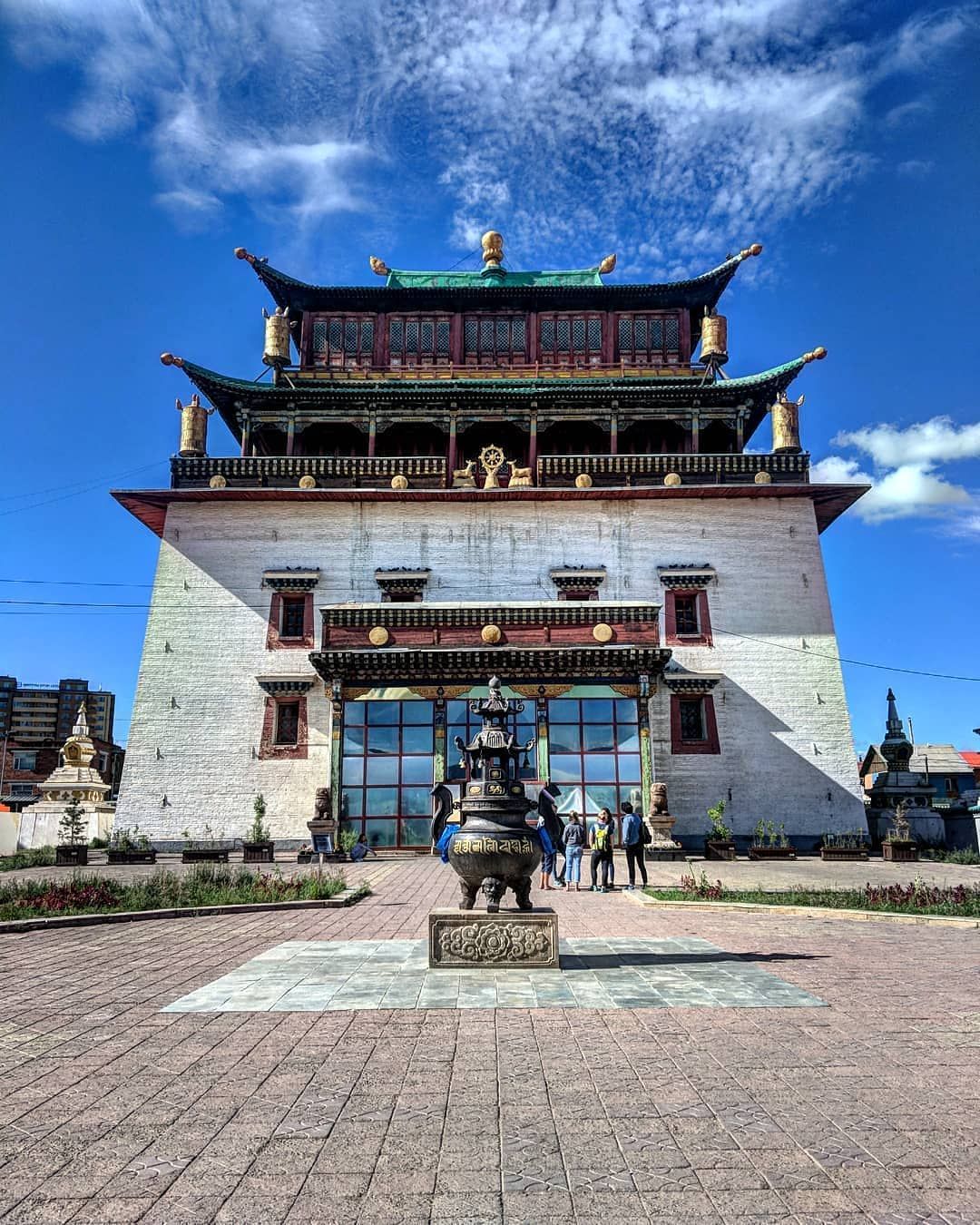
Founded in 1840, Gandan Monastery (Gandantegchinlen Khiid) stands as the spiritual center of Mongolian Buddhism and one of the most significant cultural landmarks in the country. Located on a hillside northwest of Ulaanbaatar, it once housed over 2,000 monks and more than twenty temples, colleges, and chapels. During the Stalinist purges of the 1930s, much of the monastery was destroyed and thousands of monks persecuted. Reopened in 1944, it remained the only functioning monastery in Mongolia for nearly 50 years — preserving the core of Buddhist tradition through the communist era.
Activities & Experiences
The Janraisig Statue & National Identity
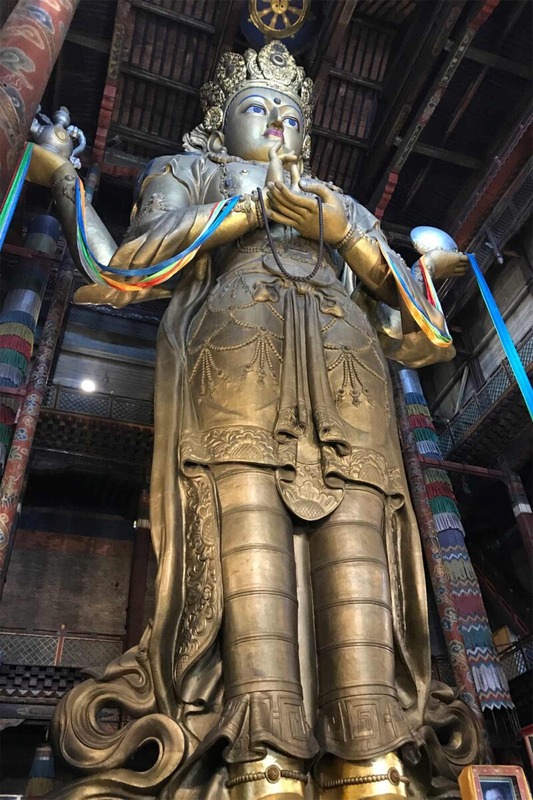
The monastery’s most iconic feature is the Migjid Janraisig statue of Avalokiteshvara — symbolizing compassion, unity, and independence. Originally built between 1911–1912 to celebrate Mongolia’s independence from the Qing Dynasty, the statue stood over 26 meters tall. It was dismantled in 1938 and taken to the Soviet Union. Following Mongolia’s democratic revolution, it was rebuilt through nationwide donations and reinstalled in 1996. Today, the 23-meter golden statue dominates the skyline and remains a focal point for pilgrims and visitors alike.
Tsogchen Hall & Historical Roots
The origins of Gandan trace back to Undur Gegeen Zanabazar (1635–1723), the first spiritual leader of Mongolian Buddhism. The Tsogchen Hall serves as the monastery’s central ceremonial and administrative space, where monks gather for daily prayers, rituals, and major religious events. It continues to function as the heart of Mongolia’s Buddhist hierarchy.
Gallery
The Gandan Library
Established in 1956, the monastery’s library preserves one of Mongolia’s largest collections of Buddhist manuscripts, including rare sutras in Tibetan, Sanskrit, Soyombo, and classical Mongolian scripts. In partnership with UNESCO since 2007, efforts have been made to digitize and protect these fragile texts for future generations.
Centers of Buddhist Learning
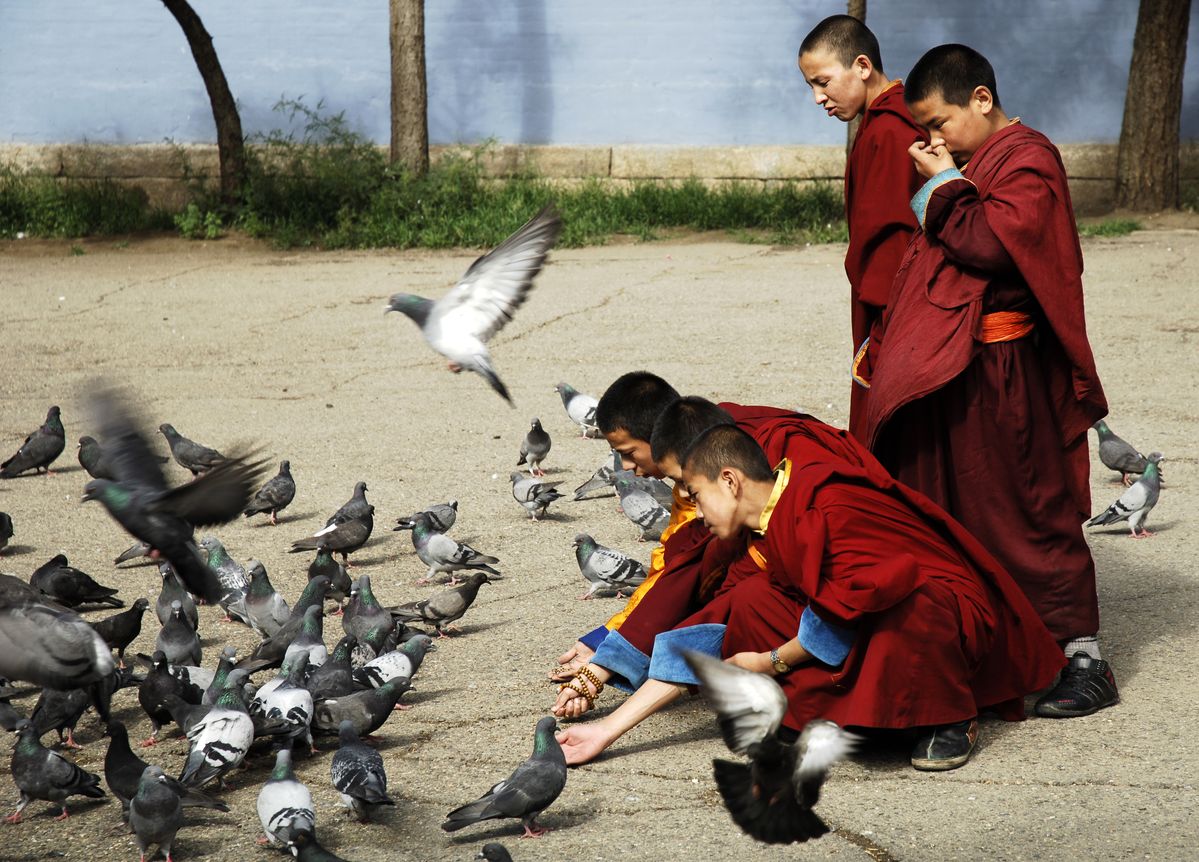
Gandan remains an active hub of education, reviving many historic monastic colleges. A major milestone occurred in 1995 when the 14th Dalai Lama gave the Kalachakra Initiation here.
Est. 1736
Dashchoiphel College
Philosophy and debate tradition
Est. 1809
Gungaachoiling College
Classical Buddhist scholarship
Est. 1910
Yidgaachoizinling College
Known for Geshe degrees
Est. 1801
Duinkhor College
Focuses on Kalachakra teachings
Est. 1912
Janraisig College
Linked to independence symbolism
Est. 1739
Jud College
Specializes in Tantric (Vajrayana) practice
Undur Gegeen Zanabazar Buddhist University
Founded in 1970, this institution trains monks and scholars from Mongolia and across the region — including Buryatia, Tuva, Kalmykia, Inner Mongolia, and Japan. It continues the academic legacy of pre-communist monastic education.
Visitor Experience
- Observe monks chanting in the Tsogchen Hall
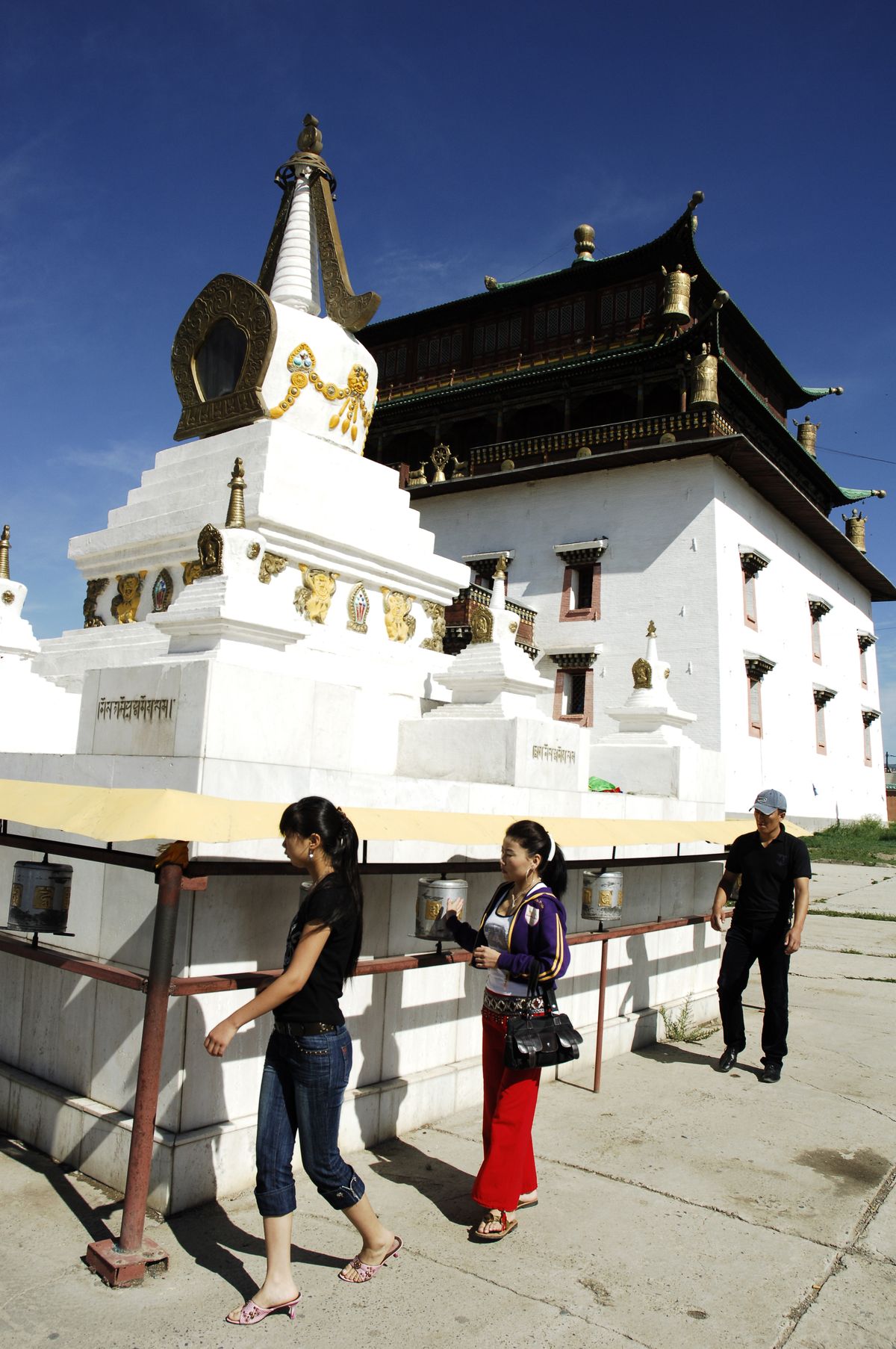
- Spin rows of prayer wheels
- Admire colorful murals and traditional architecture
- Experience an authentic, living Buddhist environment
Why Visit
Gandan Monastery is not only a religious site but a powerful symbol of Mongolia’s resilience and identity. Its blend of history, spirituality, and active monastic life makes it one of the most meaningful experiences in Ulaanbaatar. For travelers interested in culture, history, or spirituality, it remains a must-visit highlight of any journey to Mongolia.
Visit Gandan Monastery
Include this sacred destination in your custom Mongolian itinerary.
Inquire Now